
One of the things I see hold the sport industry back at times is how we straddle paradoxes: the seemingly opposing ideas that drive a lot of discourse on LinkedIn and at conferences:
Chasing participation growth vs focusing on retention
Nationally-consistent programs vs community autonomy and identity
Optimising for inclusion vs elite success
Organised, club-based sport vs informal, social-led formats
Playing for competition vs playing for enjoyment
Volunteers are the backbone vs professionalising our workforce
Preserve traditions vs "we need to change"
Supporting the national body vs engaging in rigorous debate
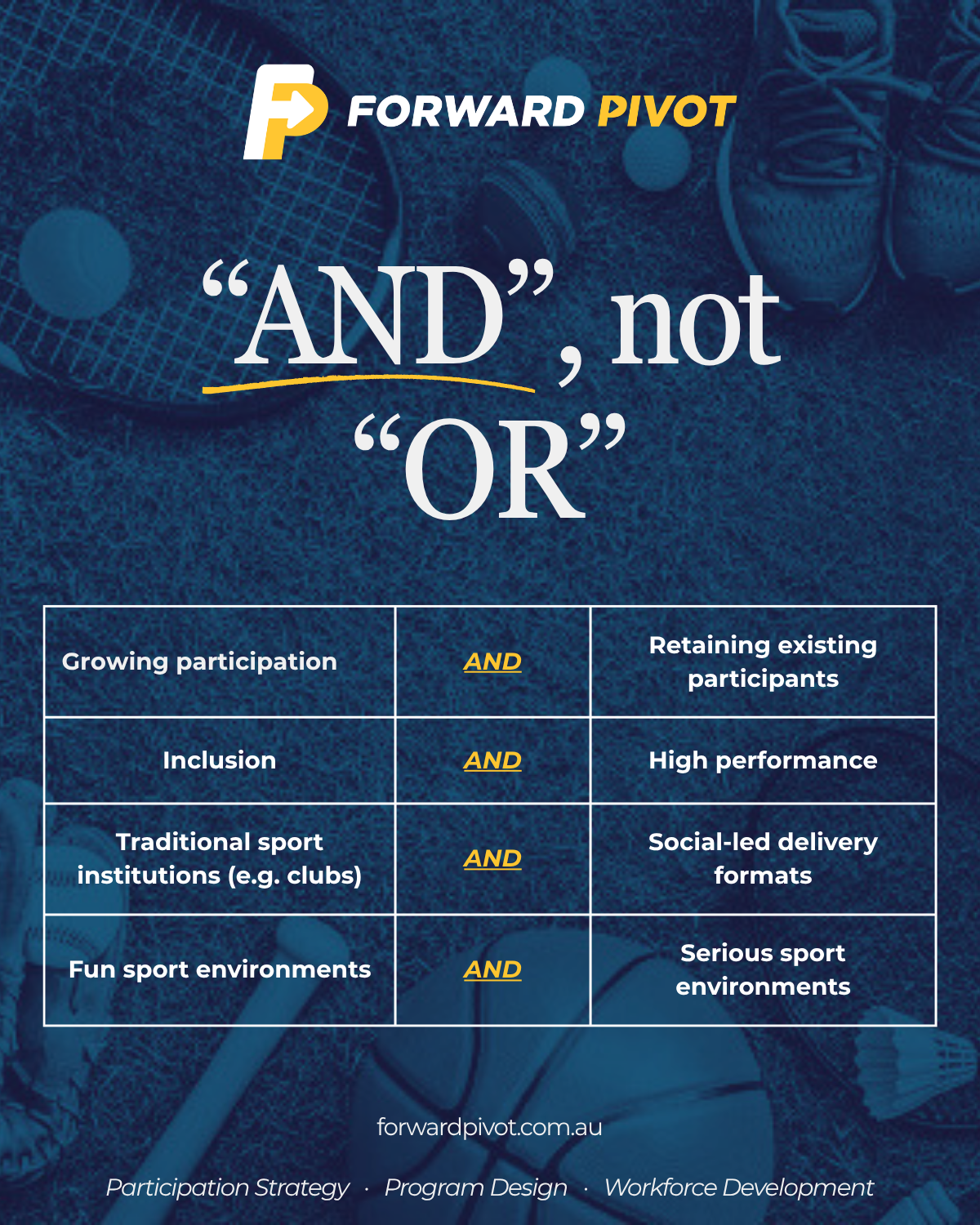
As sport lovers I think we're wired for it because sport drives us towards picking between two opposing teams: our tribe, and the one who threatens our success.
But it's also human nature too. Brene Brown wrote: "Humans get so uncomfortable straddling the tension and uncertainty that surfaces when two seemingly opposing ideas are both valid that we simply give up. We let go of the tension and pick one idea, normally the most familiar one, and make ourselves feel better by discounting or diminishing the competing idea and/or the idea holder".
The best sport managers recognise that it's a game of "AND": the two are rarely opposing forces but rather co-existing and even complementary forces.
Let's take the tension between 1) the value of structured, organised sport and 2) the need to provide socially-driven formats:
Structured sport promotes safety, pathways and legitimacy.
Social formats promotes flexibility, empowerment, and belonging.
We shouldn't be posturing for one to the demise of the other - our success comes from leaning into their complementary nature, or in the case of some, their dependent nature:
📈 Growth through retention
🥇 Elite success through inclusion
